 OpenCard
Digital business cards for a company to host itself.
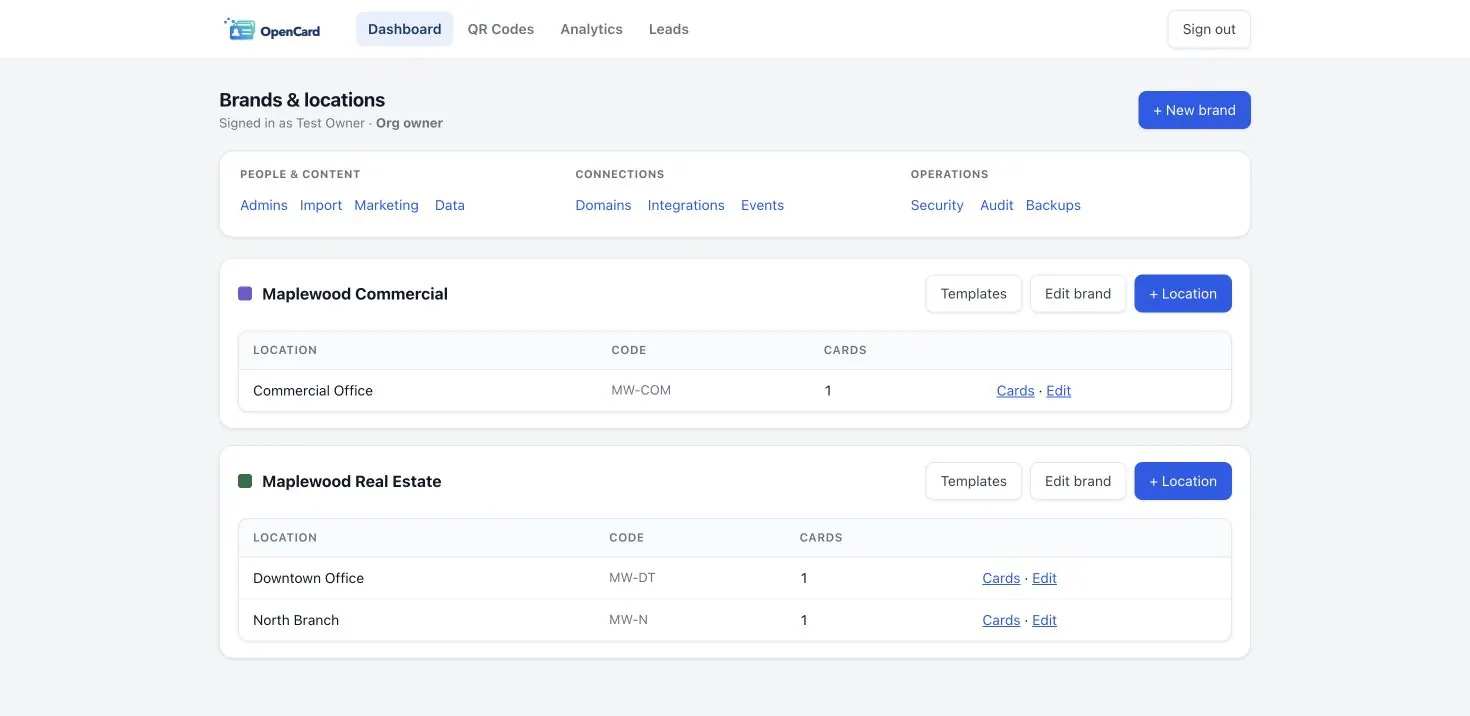
OpenCard serves shareable cards and gives your team an admin dashboard for designs, people, QR codes, leads, and backups. It runs on your server and your domain.
Inside the app
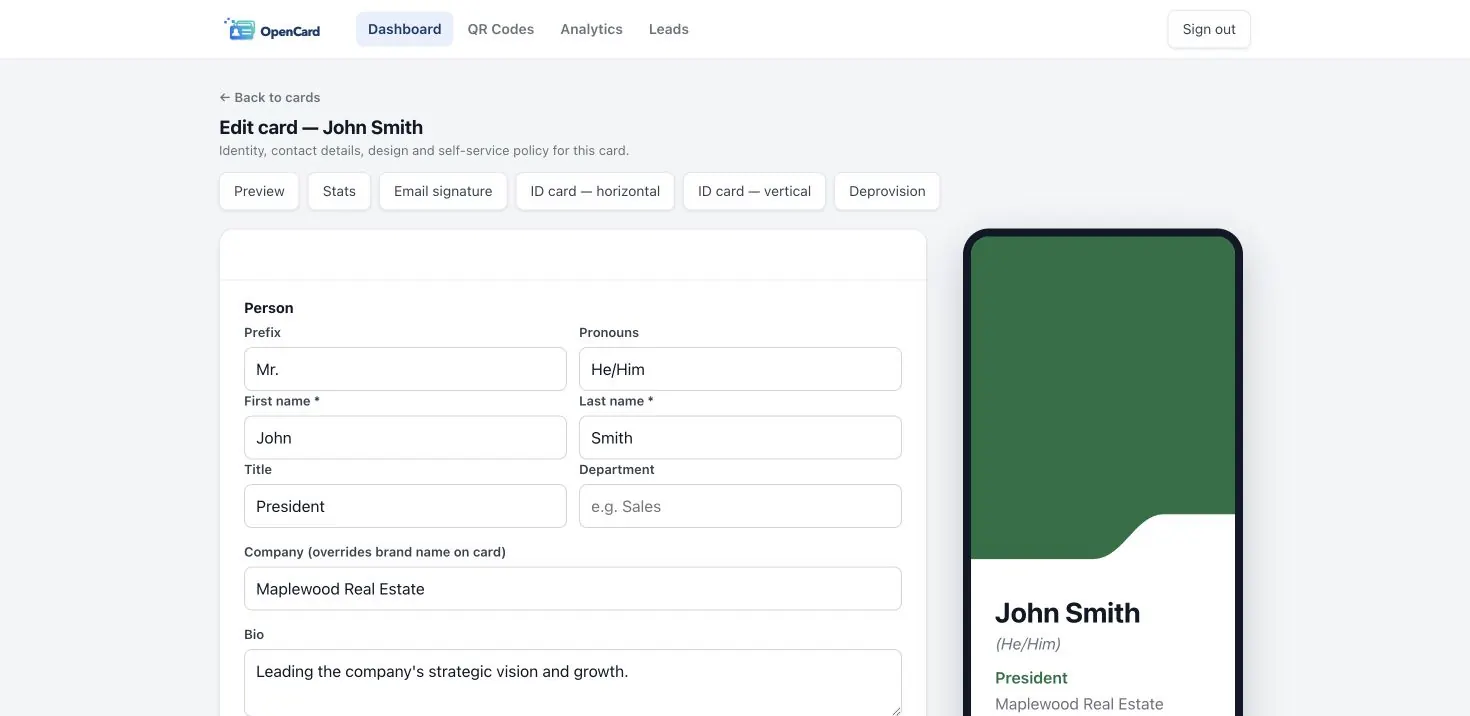
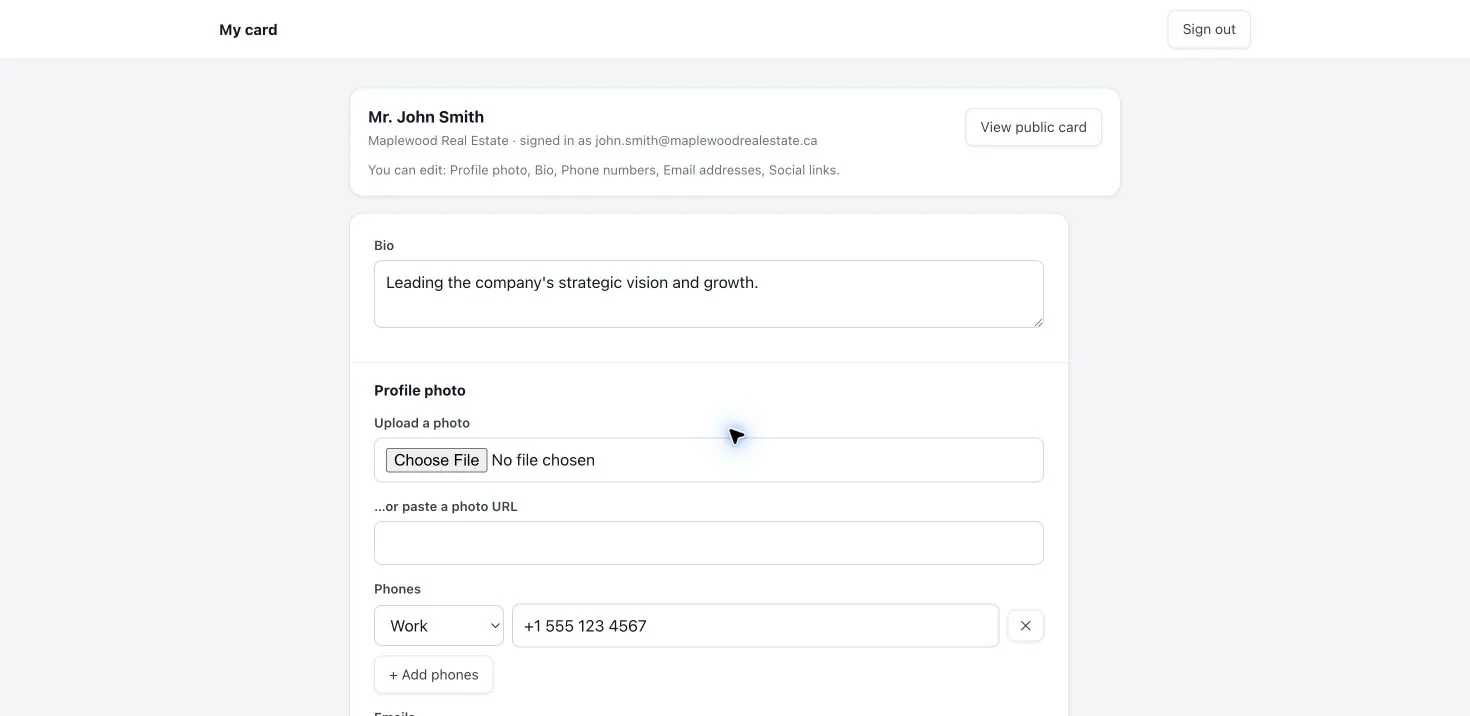
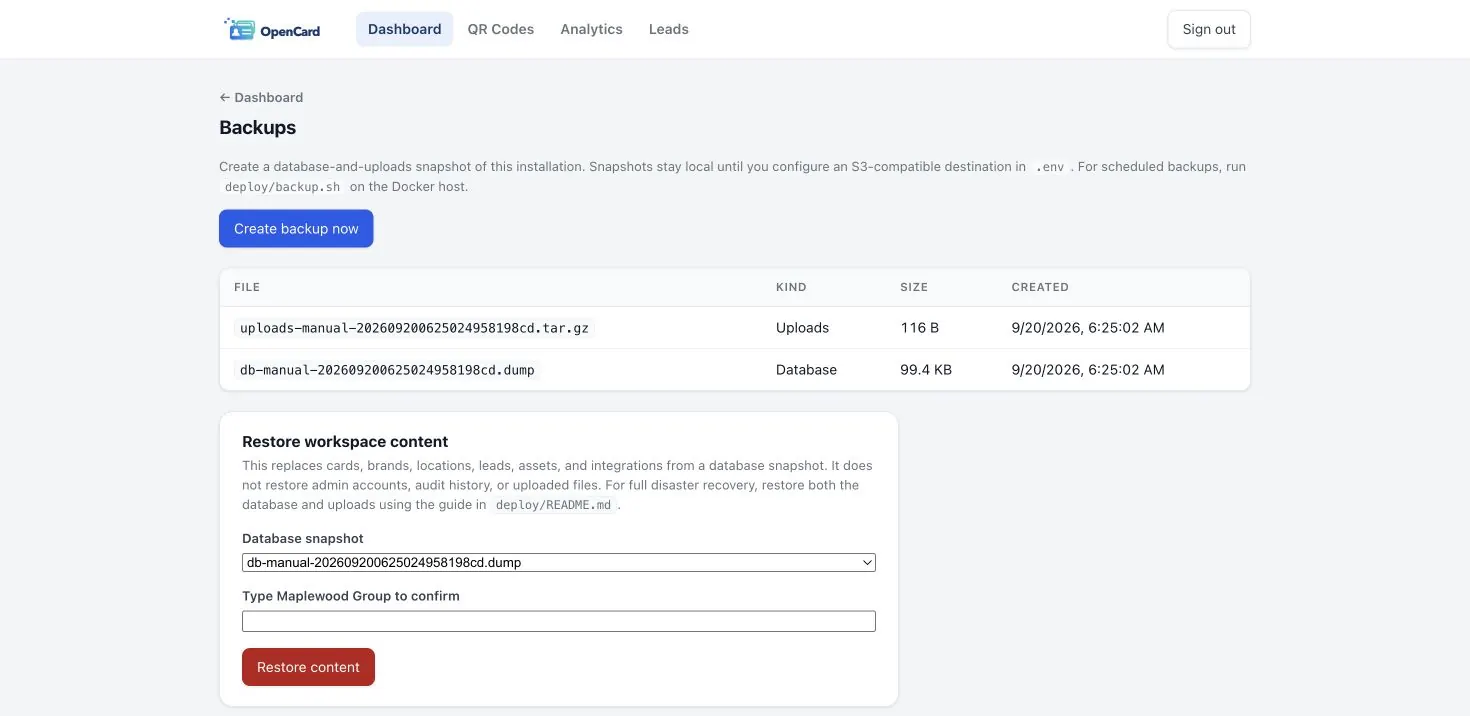
Actual screens from a disposable Docker install with sample data. Click to inspect at full size.
What ships
Cards
Public card URLs, vCard downloads, QR images, printable ID badges, brand templates, and cardholder editing at /me with admin-controlled fields.
Operations
Lead capture, card and QR analytics, audit history, local snapshots, full database/upload backups, and optional S3-compatible offsite copies.
Integrations
Microsoft Entra OIDC, SAML, SCIM, CSV and directory import, API keys, webhooks, and CRM connections. Provider credentials are optional for core cards.
Scope and non-goals
OpenCard is free software you operate. It is not a hosted account at opencard.id.
- One business per installation. Brands and locations live inside that business; this is not a multi-customer SaaS platform.
- No billing or card quotas. The app does not require a license server or paid plan to create cards.
- You run the infrastructure. HTTPS, updates, monitoring, and tested disaster recovery are the operator’s responsibility.
- Integrations are opt-in. SSO, directory sync, CRM, email, and offsite storage need your own provider accounts and configuration.
Requirements
Docker with Compose v2. The supplied stack uses PostgreSQL 16 and Node.js 24. For internet access, configure a hostname and HTTPS reverse proxy; an optional Caddy profile is included.
No published RAM or architecture support matrix yet—test against your target machine before production use.